Trade Show Logistics of Atlanta

Industrie

Manufacturing Expo Services in Atlanta

Manufacturing companies exhibiting in Atlanta benefit from coordinated stand solutions that address the unique demands of showcasing heavy machinery, production processes, and industrial innovations across the city's four primary trade show zones, ensuring smooth execution from downtown flagships to suburban facilities.

Planning focusAdapting booth heights and weights to Georgia World Congress Center's rigging capacities for overhead cranes and suspended elements in large-scale industrial demos.
Local requirementConfiguring modular islands at AmericasMart to accommodate buyer walkthroughs during market weeks focused on sourcing components and assemblies.
Execution detailOptimizing transport routes from airport venues like Georgia International Convention Center to minimize customs delays for imported prototypes and parts.
Manufacturing Expo Services in Atlanta

Atlanta stands as a pivotal hub for manufacturing expos, where events draw global buyers to venues equipped for expansive displays of equipment, components, and automation technologies. Coordinators prioritize stands that withstand high-traffic scrutiny while facilitating live demonstrations and technical consultations, leveraging the Georgia World Congress Center's vast exhibit halls, AmericasMart's market-week infrastructure, and the Georgia International Convention Center's airport proximity for efficient logistics in fly-in gatherings.

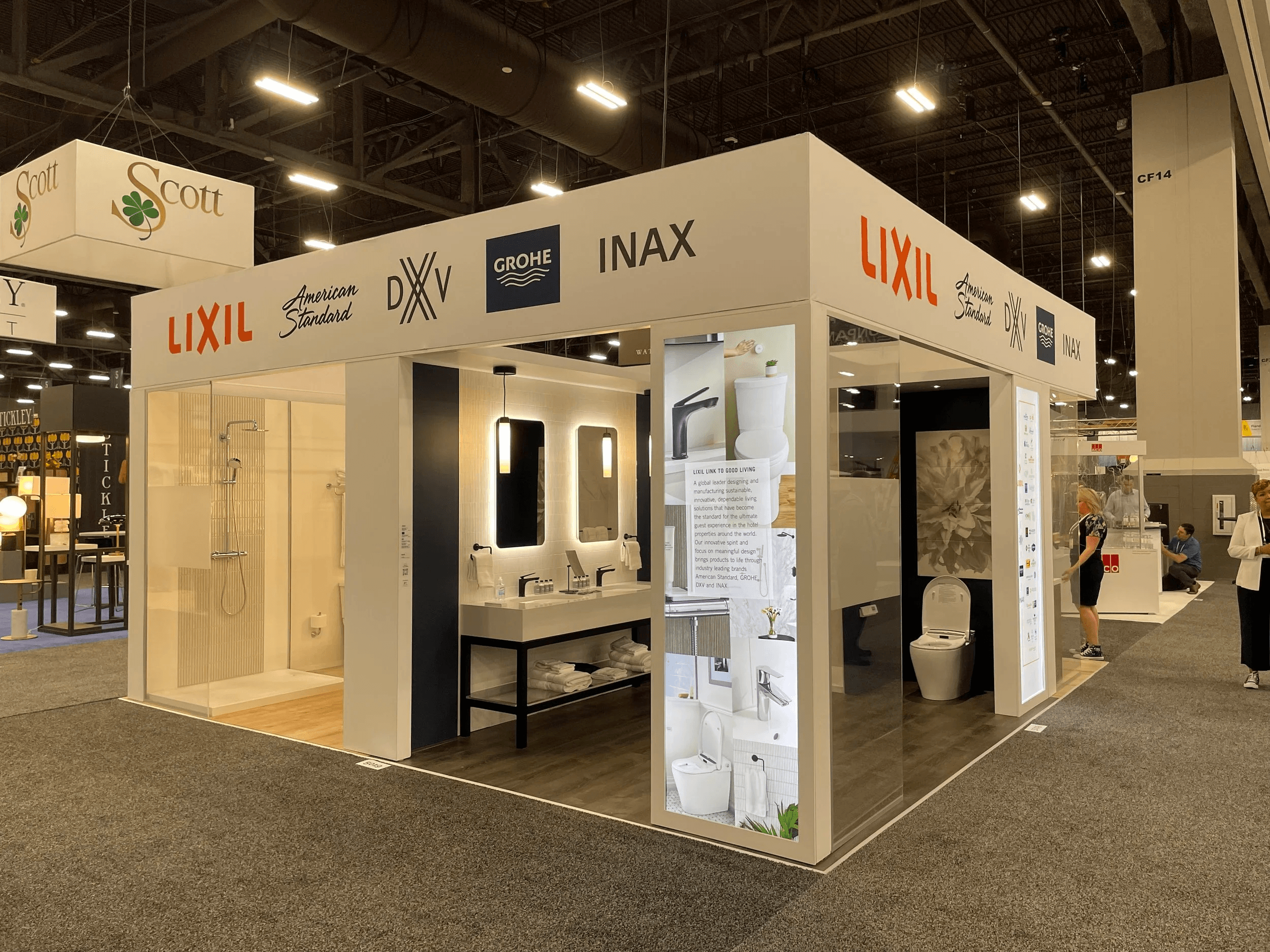
Strategic planning involves aligning booth configurations with each zone's operational rhythms: downtown's intensive convention schedules at Centennial Olympic Park activations, airport corridor's rapid setups for international attendees, Cobb's regional trade show capacities, and Gwinnett's community-driven events. This multi-zone approach delivers turnkey results, from modular frameworks supporting palletized freight to integrated lighting for precision machinery highlights, all calibrated to manufacturing exhibitors' timelines and budgets.

Effective coordination mitigates common pitfalls like venue-specific load-in constraints and inter-zone transport, transforming Atlanta's dispersed venue landscape into a unified platform for manufacturing leaders to dominate exhibit floors.
Essential Planning Priorities for Manufacturing Stands

  • Adapting booth heights and weights to Georgia World Congress Center's rigging capacities for overhead cranes and suspended elements in large-scale industrial demos.
  • Configuring modular islands at AmericasMart to accommodate buyer walkthroughs during market weeks focused on sourcing components and assemblies.
  • Optimizing transport routes from airport venues like Georgia International Convention Center to minimize customs delays for imported prototypes and parts.
  • Scaling truss systems for Cobb Convention Center's ballroom conversions into regional manufacturing showcases with flexible power distributions.
  • Incorporating durable flooring reinforcements across zones to handle forklift access and static load testing for heavy equipment exhibits.
  • Streamlining dismantle protocols to align with tight turnarounds at Gateway Center Arena's sports-adjacent event slots.
  • Ensuring compliance with multi-venue fire safety standards for fabrications involving welding demos and compressed gas storage.

Mastering Downtown Atlanta's Flagship Venues

The downtown cluster, encompassing the Georgia World Congress Center, Centennial Olympic Park, and AmericasMart Atlanta, forms the epicenter for manufacturing expos requiring maximum visibility and buyer density. Stands here demand robust engineering to support multi-story configurations that elevate products above crowded aisles, with wide aisles accommodating pallet jacks ferrying subassemblies during setup. Coordinators focus on pre-fabricated modules that snap together swiftly, reducing on-site assembly time amid the Georgia World Congress Center's high-volume conventions where simultaneous halls host overlapping industrial sectors.

AmericasMart's permanent showroom vibe influences manufacturing stands toward sleek, catalog-style presentations that blend static displays with interactive stations for material sampling, all while navigating the venue's multi-building flow. Centennial Olympic Park activations extend booth reach outdoors, prompting hybrid designs with weatherproof enclosures for prototype unveilings that spill into public spaces, drawing casual foot traffic to formal leads. This zone's depth requires foresight in power budgeting for continuous-run motors and CAD-linked screens, ensuring uninterrupted operation through marathon show days.

Leveraging Airport Corridor Efficiency

Venues like the Georgia International Convention Center and Gateway Center Arena in College Park capitalize on Atlanta's airport connectivity, ideal for manufacturing expos where overseas suppliers and executives converge via SkyTrain-accessible halls. Booth strategies emphasize compact, high-density packouts that facilitate overnight freight from international hubs, with reinforced bases to endure accelerated installs before early-morning buyer previews. Coordinators synchronize with the venues' fast-turn meeting programs, deploying lightweight aluminum extrusions that forklift easily into exhibit bays.

Gateway Center Arena's sports-adjacent setup suits dynamic manufacturing activations, such as AR-guided assembly lines or robotic arm showcases, where stands incorporate acoustic barriers to contain operational noise amid arena echoes. The corridor's logistics streamline drayage from Hartsfield-Jackson, cutting dwell times for temperature-sensitive prototypes like molded plastics or coated metals, while ensuring exhibit graphics withstand humidity fluctuations common in fly-in event cycles.

This zone's positioning demands stands with quick-disconnect utilities, allowing rapid pivots from conference formats to trade show peaks without downtime, preserving momentum for manufacturing firms chasing Time Zone Bridging deals.

Expanding to Suburban Powerhouses

Northwest Atlanta's Cobb Convention Center and northeast Gwinnett's Gas South Convention Center capture manufacturing demand beyond downtown, hosting corporate expos and association gatherings in ballroom-style halls convertible to exhibit floors. Stands for these sites prioritize scalability, with truss grids adjustable from 10x10 pods to 30x50 compounds, accommodating regional crowds focused on mid-market machinery and OEM partnerships. Coordinators map truck access routes avoiding peak commuter snarls, timing deliveries to exploit the venues' flexible load-in windows.

Cobb's northwest submarket orientation suits stands featuring grounded heavy lifts for pallet exchangers and conveyor mockups, with ballast systems distributing loads across carpeted ballrooms. Gas South's community event blend calls for approachable designs blending hardwall offices with open product bays, fostering prolonged consultations amid less harried atmospheres than downtown rushes. Multi-day formats here allow evolving booth narratives, from day-one teases to finale giveaways, all supported by on-venue storage for iterative tweaks.

Suburban coordination unifies dispersed teams, routing components from a central staging point to sidestep intra-city bottlenecks, delivering cohesive manufacturing presence across Atlanta's full spectrum.

Logistics and Fabrication Tailoring

Atlanta's four-zone dispersion necessitates fabrication protocols that standardize interfaces across venues, from Georgia World Congress Center's rigging specs to Georgia International Convention Center's bay dimensions. Manufacturing stands incorporate universal fork pockets and pallet bases, enabling carousel-style rotation between sites for repeat exhibitors hitting sequential industrial weeks. Coordinators audit freight classifications early, grouping hazmat elements like lubricants separately for smoother customs at airport jumps.

Exhibit formats lean toward custom islands with integrated workbenches for live torquing or circuit board assembly, calibrated to each venue's BTU limits for enclosed demo pods. Pre-show mockups verify tolerances, ensuring snap-fit panels align under varying hall temperatures, while graphic wraps use UV-stable vinyls proven in AmericasMart's prolonged lighting exposures. This fabrication rigor minimizes change orders, locking in costs for budget-conscious manufacturers scaling Atlanta campaigns.

Dismantle foresight includes labeled breakdowns into flatpacks, optimizing return shipping via consolidated carriers servicing all zones, reclaiming deposits promptly from diverse venue operators.

Safety and Compliance Integration

Manufacturing expos amplify risks with moving parts and high-voltage setups, prompting stands engineered to exceed Atlanta venues' unified fire marshal protocols, from GWCC's suppression zoning to Cobb's egress mapping. Coordinators embed non-combustible cores in fabrications, spacing electrical clusters to prevent arc flash in crowded islands, and anchoring overheads against seismic sway rare but codified in multi-tenant halls. Material certs accompany every shipment, verifying low-VOC paints and recycled aluminum compliant with AmericasMart's sustainability pledges.

Operational safety layers in live demos, like proximity sensors halting robotic arms during traffic surges at Centennial activations, or spill trays under hydraulic tests at GICC. Training modules for booth staff cover venue-specific evac routes, from Gateway Arena's arena bowl to Gas South's pavilion sprawls, ensuring manufacturing narratives advance without halts. Post-event audits refine future builds, incorporating incident data to fortify designs against Atlanta's variable crowd dynamics.

This compliance backbone sustains exhibitor certifications, positioning stands as reliable platforms for pitching OSHA-aligned innovations to discerning industrial buyers.

ROI Optimization Through Zone Rotation

Manufacturing firms maximize Atlanta investments by rotating refined stands across zones, starting with downtown flagships for prestige leads, cascading to airport for volume, and suburban for nurturing. Coordinators track performance metrics per venue, tweaking sightline elevations for GWCC's upper decks versus Cobb's level floors, ensuring consistent branding amid format shifts. Seasonal market weeks at AmericasMart prompt variant kits, swapping machinery bays for sample pods without full refurbs.

Budget allocation favors modular upgrades over ground-up rebuilds, with data-driven swaps like brighter LEDs for dimmer suburban halls or reinforced floors for vibration-heavy demos at Gateway. Lead capture tech embeds universally, syncing CRM across events to attribute closes to zone-specific tactics, amplifying ROI in Atlanta's layered ecosystem. This rotational mastery turns one fabrication into multi-event assets, compounding value for serial exhibitors.

Industries

Frequently Asked Questions About Manufacturing Expo Services

Which Atlanta venues best suit large manufacturing machinery displays?

The Georgia World Congress Center and AmericasMart Atlanta excel for expansive machinery due to their oversized halls and rigging infrastructure, while Cobb Convention Center handles regional scales in convertible ballrooms.

How do airport venues impact manufacturing expo logistics?

Georgia International Convention Center and Gateway Center Arena streamline fly-in logistics with SkyTrain proximity, reducing drayage times for international prototypes and enabling rapid setups for global buyer meets.

What booth features enhance manufacturing demos?

Integrated demo zones with reinforced flooring, modular power grids, and acoustic enclosures support live operations like assembly lines or torque tests across all Atlanta zones.

How to coordinate multi-zone manufacturing campaigns?

Standardize fabrication interfaces for smooth rotation, timing loads to venue windows, and centralizing freight to navigate Atlanta's zones from downtown to Gwinnett efficiently.

What safety standards apply to industrial stands?

Exceed fire marshal rules with non-combustibles, proper spacing, and anchors, verified against each venue's specs from GWCC suppressions to Cobb egress paths.

Can stands adapt between convention and market formats?

Yes, modular designs with snap-fit panels and universal utilities pivot from GWCC conventions to AmericasMart markets without major alterations.

Need a clearer plan?

Secure Your Manufacturing Stand Today

Partner with Expo Stand Builders of Atlanta for precision-coordinated booths that dominate every venue. Request a detailed planning consultation to blueprint your next expo success.

Start the conversation