Trade Show Logistics of Atlanta

Location

Downtown Atlanta GA Trade Show Exhibit Planning and Coordination

Downtown Atlanta anchors the Southeast’s convention activity through a tight cluster of venues that demand precise exhibit strategies attuned to scale, audience flow, and activation potential.

Planning focusMapping exhibit requirements against the GWCC’s convention-scale infrastructure
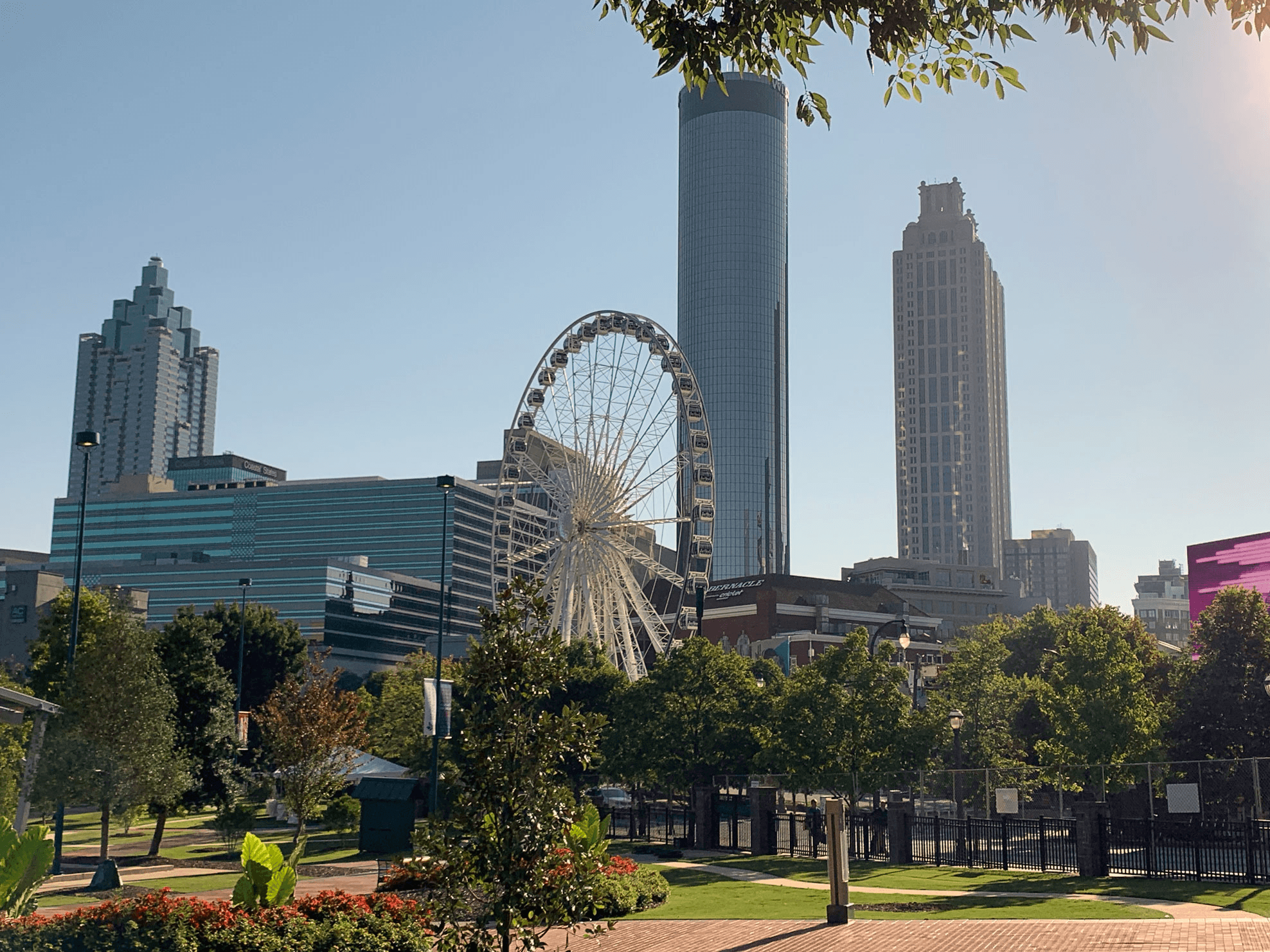
Local requirementDesigning activations that capitalize on Centennial Olympic Park’s public prominence
Execution detailAligning booth formats with AmericasMart’s buyer-showroom rhythms
Downtown Atlanta GA Trade Show Exhibit Planning and Coordination

The downtown district operates as Atlanta’s flagship convention zone by concentrating three complementary assets: the Georgia World Congress Center, Centennial Olympic Park, and AmericasMart. This configuration produces layered demand for exhibits that serve trade shows, public activations, and buyer showroom environments within walking distance. Planners must therefore calibrate every design decision to the distinct operational cadence of each site rather than treating downtown as a single uniform market.

Unlike more specialized corridors such as the airport-adjacent College Park zone or the suburban Cobb and Gwinnett clusters, downtown draws national and international audiences that expect exhibits capable of transitioning between formal presentation, interactive engagement, and showroom-style consultation. Coordination at this level requires mapping show schedules, attendee movement patterns between venues, and the regulatory nuances that govern the shared downtown footprint.

Effective preparation begins with recognizing how these venues interact. A single campaign can span a large-scale convention at the GWCC, an outdoor brand experience in Centennial Olympic Park, and targeted buyer appointments at AmericasMart. Such integration elevates visibility but only when every element is sequenced against the district’s overlapping calendars and spatial constraints.
Core Planning Elements for Downtown Atlanta Exhibitors

  • Mapping exhibit requirements against the GWCC’s convention-scale infrastructure
  • Designing activations that capitalize on Centennial Olympic Park’s public prominence
  • Aligning booth formats with AmericasMart’s buyer-showroom rhythms
  • Sequencing multi-venue participation within the dense downtown footprint
  • Differentiating strategies from airport, Cobb, or Gwinnett corridor events
  • Accounting for overlapping event calendars that define peak downtown activity
  • Prioritizing sightline, traffic flow, and brand consistency across district venues

The Flagship Status of Downtown Atlanta Within the Regional Convention Landscape

Atlanta’s trade show demand divides across four distinct operating zones, yet downtown remains the undisputed flagship because the Georgia World Congress Center, Centennial Olympic Park, and AmericasMart together generate the highest concentration of exhibit, activation, and buyer-showroom opportunities. This clustering creates efficiencies for exhibitors who can coordinate presence across multiple venues without long transit times, but it also raises the bar for execution. Planners must treat the district as an integrated ecosystem rather than isolated buildings.

The depth of demand stems from the ability to host simultaneous events that feed one another. Corporate launches at the GWCC can be reinforced with public experiences in the adjacent park, while specialized markets at AmericasMart allow follow-on showroom appointments. This synergy attracts organizers and attendees who might otherwise choose single-purpose suburban facilities. Understanding these interconnections allows for more strategic allocation of exhibit budgets and design resources.

Compared with secondary districts, downtown’s calendar features higher-profile national and international shows that require exhibits capable of conveying authority at scale. The planning process therefore emphasizes early alignment with official show timelines, venue load-in protocols, and audience demographics unique to each property. Resource allocation must reflect the reality that downtown events rarely exist in isolation; most successful programs span at least two of the core venues.

Georgia World Congress Center: Operational Considerations for Large-Format Exhibits

As the largest component of the downtown cluster, the Georgia World Congress Center hosts events that demand exhibits engineered for high traffic volume and extended viewing distances. The facility’s programming frequently overlaps with activities in Centennial Olympic Park, creating natural opportunities for coordinated brand storytelling that begins indoors and extends to outdoor environments. Planning therefore requires designs that remain legible and functional in both controlled hall settings and open park spaces.

Exhibitors benefit from recognizing that GWCC events often serve as anchor programming for the broader downtown district. This positioning means booths must accommodate multiple functions: product demonstration, educational sessions, and lead capture, sometimes within the same footprint. The surrounding infrastructure of hotels and transit hubs further influences attendee behavior, making it essential to design for shorter dwell times and higher pass-through traffic than might be seen in suburban venues.

Coordination success depends on mapping the center’s event calendar against complementary programming at AmericasMart. When shows run concurrently, exhibit elements can be reused or reconfigured to maintain brand presence without duplication of fabrication. This approach reduces complexity while amplifying impact across the district’s core institutions.

AmericasMart Atlanta: Adapting to Buyer Showroom and Market Dynamics

AmericasMart operates on a rhythm distinct from traditional convention halls, focusing on seasonal markets where buyers expect intimate, consultative environments rather than large-scale theatrical displays. Within the downtown cluster this creates an opportunity to complement GWCC exhibits with more targeted showroom configurations that facilitate deeper product conversations. The permanent nature of the facility means exhibits must integrate with established architecture and circulation patterns developed over decades of market activity.

Exhibitors planning for AmericasMart must differentiate their approach from park or convention center work. Booths here function more as sophisticated retail environments than temporary event structures, requiring finishes and lighting that convey permanence and quality. The district advantage lies in the ability to transport key elements from a GWCC installation to an AmericasMart showroom with minimal modification, preserving design integrity while adapting to new audience expectations.

The interplay between AmericasMart’s calendar and the larger downtown schedule allows strategic layering. A brand can establish broad awareness during a GWCC show and then convert interest into appointments at the mart. This progression demands exhibit assets that are modular enough to serve both purposes without compromising the distinct atmosphere each venue requires.

Centennial Olympic Park: Activation Strategies Within the Downtown Context

Centennial Olympic Park functions as the public face of downtown Atlanta conventions, offering open-air space that complements the enclosed environments of the GWCC and AmericasMart. Activations here must contend with variable weather, unrestricted pedestrian flow, and the symbolic importance of the park as a gathering place. Successful coordination therefore integrates park experiences with indoor exhibits to create a unified district-wide narrative.

The park’s visibility from surrounding venues and major thoroughfares makes it ideal for large-scale brand statements that draw attendees toward indoor booths. However, designs must respect the park’s role as shared civic space rather than dedicated exhibit ground. This constraint favors experiential installations over traditional booth structures, with elements that can be quickly installed and removed between scheduled events.

When planned as part of a larger downtown program, park activations serve as both magnets and extensions. An indoor exhibit at the GWCC gains additional reach when reinforced by a memorable outdoor experience that lives in attendees’ minds long after the formal show day ends. The key is ensuring every element reinforces the same core messaging while respecting the operational boundaries of each location.

Multi-Venue Coordination Across the Downtown District

The true advantage of downtown Atlanta lies in the ability to execute coordinated campaigns that span the GWCC, Centennial Olympic Park, and AmericasMart within a compact geographic area. This proximity reduces logistical complexity compared with programs that stretch across distant suburban corridors. Yet it introduces new requirements for scheduling precision, asset modularity, and messaging consistency that many exhibitors initially underestimate.

Effective district coordination begins with calendar analysis that identifies overlapping dates and audience crossovers. An exhibitor might install a primary structure at the congress center, deploy a satellite activation in the park during peak days, and maintain a refined showroom presence at AmericasMart for follow-up appointments. Each component must be designed from the outset to support this progression rather than functioning as standalone elements.

The planning resource must also account for the distinct regulatory and operational environments of each venue. Load-in routes, storage limitations, and move-out deadlines differ significantly between the facilities even though they sit within the same district. Anticipating these variables allows for smoother transitions and more effective use of exhibit investment across the downtown footprint.

Differentiating Downtown from Atlanta’s Airport, Cobb, and Gwinnett Corridors

While the airport corridor centered on the Georgia International Convention Center prioritizes fly-in convenience and the Cobb and Gwinnett facilities serve regional corporate and community events, downtown remains distinct through its combination of scale, density, and institutional prestige. Exhibits planned for the flagship district must therefore project greater formality and adaptability than those suited to suburban or airport venues. The audience expectations and competitive environment differ in ways that influence every design decision.

Airport-adjacent events often favor compact, quick-assembly structures that accommodate tight schedules between flights. Downtown programs, by contrast, reward investment in larger, more detailed environments that can be experienced over multiple days. Similarly, Cobb and Gwinnett shows frequently target more localized audiences, allowing for regionally specific messaging that would feel out of place amid the international crowds typical of downtown Atlanta.

Understanding these distinctions prevents misallocation of resources. An exhibit engineered for Gas South or the Cobb Galleria will likely underperform in the deeper competitive field of the GWCC or the refined environment of AmericasMart. District-specific planning ensures that design, materials, and activation tactics align with the unique demands of the flagship zone rather than applying a generic Atlanta playbook.

Practical Preparation Steps for Downtown Atlanta Exhibit Programs

Preparation for downtown events begins with thorough mapping of the specific venues involved in each campaign. Reviewing official planning documents for the Georgia World Congress Center, understanding the market schedule at AmericasMart, and identifying activation windows at Centennial Olympic Park creates a foundation for realistic timelines. This research phase reveals where modular components can be shared and where venue-specific adaptations become necessary.

Budget planning must reflect the district’s emphasis on quality and consistency. Because downtown audiences encounter the same brand across multiple locations, any discrepancy in finish level or design coherence becomes immediately apparent. Allocating resources toward versatile core elements that can be reconfigured for each venue typically delivers better return than multiple disconnected installations.

The final stage involves stress-testing the program against potential overlaps and conflicts inherent to the downtown calendar. Major events at the GWCC can coincide with market weeks at AmericasMart, requiring clear division of labor between exhibit components and staff responsibilities. When approached systematically, this complexity becomes an advantage that allows brands to achieve greater cumulative impact than would be possible in any single venue.

Locations

Common Questions About Downtown Atlanta Trade Show Coordination

Why does Downtown Atlanta qualify as the flagship convention zone?

The combination of the Georgia World Congress Center, Centennial Olympic Park, and AmericasMart creates the deepest concentration of exhibit, activation, and buyer-showroom demand in the Atlanta region, distinguishing it from airport or suburban corridors.

How should exhibitors approach the differences between GWCC and AmericasMart?

The GWCC favors large-scale, high-traffic trade show environments while AmericasMart requires consultative showroom configurations. Successful coordination develops modular assets that adapt to both without losing brand consistency.

What role does Centennial Olympic Park play in downtown exhibit strategy?

The park enables public-facing activations that extend the reach of indoor exhibits at the GWCC and AmericasMart, creating memorable brand experiences that drive traffic between venues within the compact district.

How does downtown planning differ from other Atlanta submarkets?

Downtown programs must address higher-profile international audiences, overlapping venue calendars, and greater emphasis on design coherence across multiple sites compared with the more specialized airport or suburban venues.

Is multi-venue coordination practical within Downtown Atlanta?

The close proximity of core venues makes coordinated campaigns more feasible than in dispersed corridors, provided planning accounts for distinct operational requirements and overlapping event schedules at each location.

What preparation steps maximize success in the downtown district?

Begin with detailed calendar mapping across all three primary venues, develop modular exhibit components that transition between environments, and allocate resources to maintain consistent quality throughout the district footprint.

Need a clearer plan?

Plan Your Downtown Atlanta Exhibit Program

Connect with our planning specialists to develop coordinated exhibit strategies for the Georgia World Congress Center, Centennial Olympic Park, and AmericasMart.

Start the conversation