Trade Show Logistics of Atlanta

Location

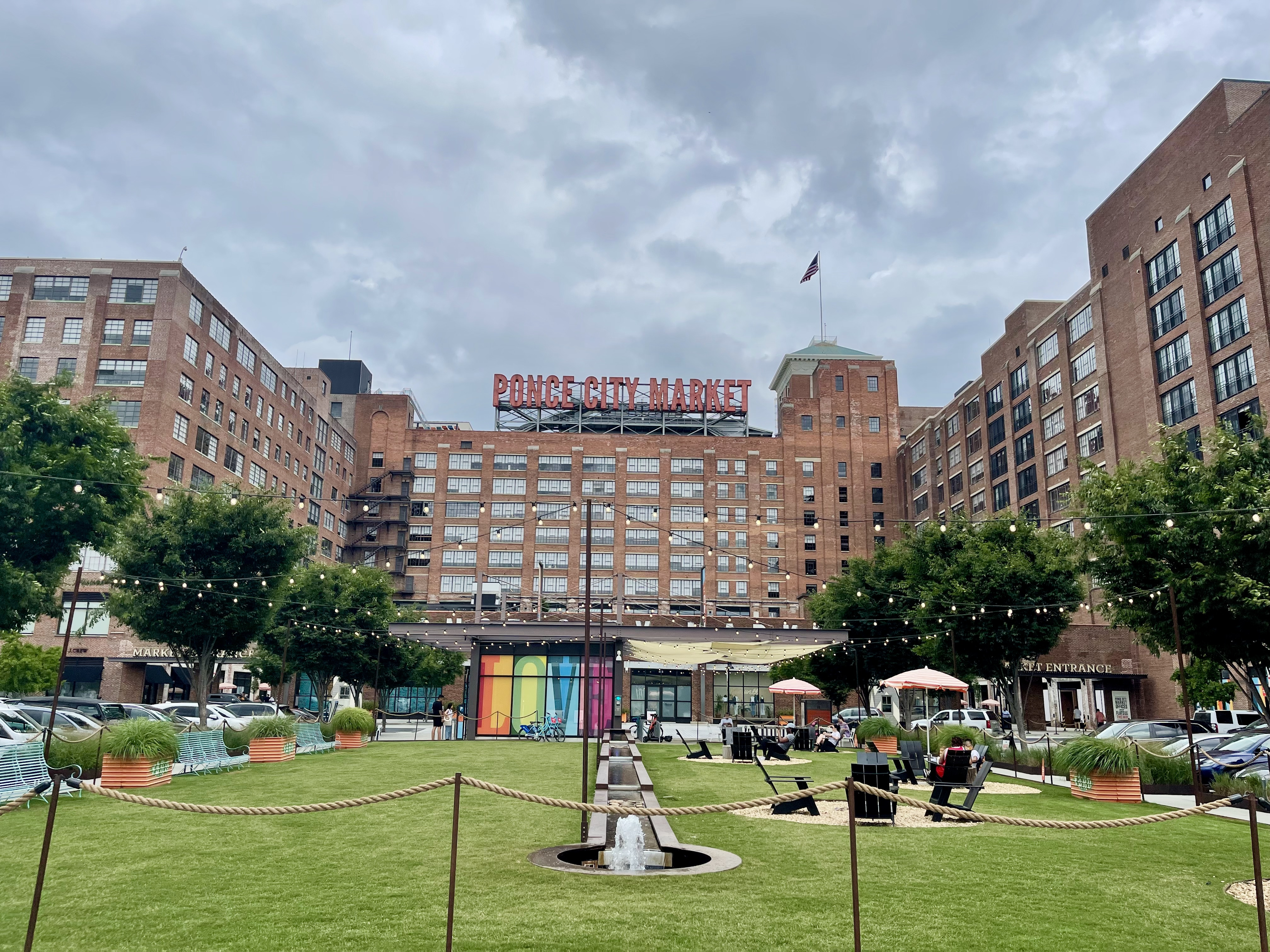
Trade Show Exhibit Coordination for Old Fourth Ward, Atlanta GA

Position your brand effectively by coordinating exhibits that account for Old Fourth Ward's adjacency to Atlanta's flagship downtown convention cluster and its role in the city's multi-zone demand landscape.

Planning focusGeographic alignment with downtown flagship venues
Local requirementIntegration with GWCC and AmericasMart operational standards
Execution detailFly-in efficiencies via the airport and College Park corridor
Trade Show Exhibit Coordination for Old Fourth Ward, Atlanta GA

Old Fourth Ward functions as a secondary district within Atlanta's expansive trade show market, offering planners a vantage point that connects historic urban fabric with immediate access to the primary convention core. Atlanta's demand divides across four operational zones: the downtown flagship area led by major venues, the airport and College Park corridor optimized for fly-in efficiency, the Cumberland and Cobb submarket, and the Duluth and Gwinnett corridor. This structure requires exhibit strategies that transcend any single neighborhood, ensuring designs and timelines support participation across varied event scales and attendee flows.

The downtown zone earns flagship status through the concentrated pull of the Georgia World Congress Center, Centennial Olympic Park, and AmericasMart, which together drive the highest volume of exhibit, activation, and buyer-showroom activity in the region. Planners referencing Old Fourth Ward must calibrate their approaches to these venues' operational standards while recognizing opportunities for district-level extensions such as ancillary receptions or branded experiences that capitalize on proximity without disrupting core event logistics.

Effective coordination in this environment prioritizes nuance over generalization, focusing on venue-specific requirements, cross-zone logistics, and the ability to maintain consistency whether an event lands at a downtown campus, an airport-adjacent facility, or a suburban expo center. This planning mindset delivers measurable advantages for exhibitors seeking to maximize presence throughout Atlanta's calendar.

Core Planning Priorities for Old Fourth Ward in Atlanta's Trade Show Market

  • Geographic alignment with downtown flagship venues
  • Integration with GWCC and AmericasMart operational standards
  • Fly-in efficiencies via the airport and College Park corridor
  • Connectivity to Cobb and Gwinnett suburban expo demand
  • Modular design approaches for multi-zone rotations
  • District-level differentiation in audience engagement
  • Timeline synchronization across Atlanta venue clusters

Mapping Old Fourth Ward Within Atlanta's Four-Zone Trade Show Framework

Atlanta's trade show activity distributes across four distinct operating zones rather than concentrating in a single downtown pocket. The downtown flagship zone generates the greatest depth of demand due to its tight clustering of premier facilities. Old Fourth Ward sits in close adjacency to this core, enabling planners to treat it as an extension rather than an isolated secondary market. This positioning supports strategies that blend participation in large-scale conventions with targeted activations that leverage the district's accessibility.

The airport and College Park corridor serves fly-in audiences through direct SkyTrain links, reducing logistical friction for national exhibitors. Meanwhile, the Cumberland-Cobb and Duluth-Gwinnett corridors capture corporate, association, and community events that often draw overlapping attendance from downtown programs. Coordination resources that account for all four zones prevent fragmented execution and allow for unified branding across an exhibitor's full Atlanta schedule.

For Old Fourth Ward specifically, the framework encourages early mapping of event dates against venue availability in the primary cluster. This prevents scheduling conflicts and supports efficient material movement between zones. Operational details such as advance freight timing and I&D windows become critical when an exhibit program spans both downtown campuses and suburban facilities within the same quarter.

By maintaining this zonal perspective, planners achieve greater flexibility in exhibit scaling, storage considerations between shows, and audience targeting that reflects the distinct yet interconnected nature of each area.

Flagship Downtown Venues and Their Influence on Old Fourth Ward Planning

The Georgia World Congress Center stands at the heart of downtown Atlanta's convention activity, supported by comprehensive planning documentation that outlines floor specifications, move-in protocols, and technical requirements. Exhibitors coordinating with Old Fourth Ward in mind benefit from aligning booth footprints and material selections with these standards to ensure smooth compatibility. Centennial Olympic Park complements the indoor space by hosting large-format outdoor activations and public engagements that frequently coincide with major shows.

AmericasMart adds another layer through its permanent showroom environment, where exhibit approaches shift toward merchandise display, traffic optimization, and repeated buyer interactions rather than short-term convention cycles. The operational nuance here lies in creating modular components that transition effectively between the expansive halls of the GWCC and the more intimate, repeat-visit settings at AmericasMart.

Old Fourth Ward's proximity allows planners to incorporate neighborhood-specific extensions such as evening programming or branded hospitality that reinforce daytime exhibit presence. This layered strategy requires precise timeline management so that elements fabricated for one venue can be repurposed or supplemented without introducing unnecessary cost or complexity.

Venue specificity remains essential. Each facility maintains distinct load-in procedures, ceiling heights, and utility access points that must inform early design decisions rather than being addressed after fabrication.

Airport Corridor Venues and Fly-In Operational Advantages

The Georgia International Convention Center and Gateway Center Arena at College Park are deliberately positioned to capitalize on ATL SkyTrain access, delivering convenience for attendees arriving through Hartsfield-Jackson Atlanta International Airport. This corridor addresses a practical segment of Atlanta's trade show demand that values minimized ground transportation time. When Old Fourth Ward serves as a secondary base for planning, these venues integrate naturally into multi-day itineraries that combine airport-proximate events with downtown programs.

Floor plans at the GICC support detailed pre-event layout validation, allowing coordinators to optimize square footage allocation and sight lines well before move-in. Such advance work becomes particularly valuable for exhibitors managing parallel commitments across zones, as it reduces on-site adjustments and supports tighter scheduling windows.

Operational detail extends to understanding attendee flow patterns created by SkyTrain connectivity. Exhibits in this corridor often prioritize quick-impact graphics and modular structures that can be installed rapidly to match the accelerated pace of fly-in audiences. Coordination that respects these rhythms enhances overall program coherence when Old Fourth Ward elements are added to the mix.

Planners gain efficiency by treating the airport corridor as a complementary rather than competing zone, enabling unified messaging that travels with attendees from arrival through downtown sessions and potential Old Fourth Ward extensions.

Suburban Expo Facilities and Cross-Zone Integration Strategies

Northwest and northeast suburban venues, including the Cobb Convention Center and Gas South Convention Center, fulfill a different but equally important role by hosting corporate meetings, association gatherings, and community-oriented events outside the downtown core. These facilities expand Atlanta's total addressable market and frequently draw participants who also attend flagship shows. Effective planning therefore treats suburban dates as extensions of a broader campaign rather than standalone efforts.

Old Fourth Ward planners can leverage this suburban demand by developing exhibit components that scale appropriately for both large downtown halls and more compact suburban spaces. Material durability, shipping logistics between zones, and storage solutions between events become decisive factors in maintaining cost efficiency across an annual Atlanta rotation.

District-level differentiation appears in how suburban events often emphasize relationship-building over broad awareness. Coordination resources help exhibitors adapt messaging, booth configuration, and follow-up tactics to match each zone's audience profile while preserving brand continuity. This prevents the inefficiency of creating entirely separate programs for each submarket.

The result is a cohesive Atlanta presence that captures value from every operating zone without forcing a downtown-only perspective that would overlook substantial opportunities in Cobb, Gwinnett, and the airport corridor.

Custom Fabrication Approaches for Atlanta's Venue Diversity

Atlanta's mix of convention centers, arena floors, showroom campuses, and suburban expo halls demands fabrication solutions that balance customization with practical reusability. Rather than pursuing One Size Fits All rental inventory, targeted fabrication allows exhibitors to address the precise dimensional, lighting, and structural requirements of each venue type while maintaining the flexibility to reconfigure for subsequent events.

Modularity serves as a central principle. Components designed for the expansive footprints at the Georgia World Congress Center can incorporate attachment points that enable reconfiguration for the more intimate settings at AmericasMart or the varied layouts found in Cobb and Gwinnett facilities. This approach reduces long-term expenditure and supports tighter timelines between shows.

Operational detail includes selection of materials that withstand Atlanta's climate variations during outdoor activations at Centennial Olympic Park as well as indoor climate-controlled environments. Graphic systems must scale effectively from large-scale convention backwalls to targeted interactive displays, ensuring visual impact remains consistent regardless of venue.

Early collaboration during the design phase with these venue realities in mind prevents costly revisions and positions the entire program for smoother execution across Old Fourth Ward-adjacent dates and the full spectrum of Atlanta zones.

Timeline and Budget Coordination for Multi-District Atlanta Programs

Successful outcomes in Old Fourth Ward and greater Atlanta depend on rigorous timeline synchronization that begins months ahead of the first move-in date. Planners must map critical milestones against the distinct calendars of downtown, airport, Cobb, and Gwinnett venues to avoid conflicts in fabrication, shipping, or labor availability. This foresight becomes especially important when an exhibitor commits to multiple events within a single fiscal quarter.

Budget allocation follows similar logic. Rather than assigning fixed percentages per event, resources should be distributed according to the strategic weight of each zone within the overall Atlanta objective. Downtown flagship participation may command larger fabrication investment while suburban or airport events focus on reuse and targeted enhancements, producing better aggregate return.

Post-event review processes further refine future coordination by capturing data on actual versus projected attendance flows between districts, material durability across venues, and the effectiveness of district-level extensions originating from Old Fourth Ward. These insights compound over successive Atlanta rotations.

The authoritative planning lens therefore treats budgeting and scheduling as integrated disciplines that respect the interconnected nature of the city's trade show zones rather than addressing them in isolation.

Refining Strategies Through Venue-Specific Insights and Market Patterns

Atlanta's convention calendar exhibits recurring patterns tied to the flagship venues and their surrounding districts. By studying these cycles, coordinators can anticipate peak periods at the Georgia World Congress Center and AmericasMart and align Old Fourth Ward extensions to maximize synergy rather than compete for attention. This pattern recognition supports proactive adjustments in exhibit design and programming.

Insights drawn from planning guides and floor documentation enable precise pre-visualization of how a booth will function within each unique space. Such preparation minimizes surprises during installation phases and allows greater focus on attendee experience whether the setting is a downtown activation, an airport-adjacent arena, or a suburban conference.

Long-term refinement involves tracking which exhibit elements travel most successfully across zones and which require district-specific adaptation. Over time this creates a refined Atlanta playbook that balances standardization for efficiency with customization for impact, particularly valuable for exhibitors returning to the market annually.

Old Fourth Ward's secondary status does not diminish its planning importance; instead it offers a nuanced vantage point for integrating the full range of Atlanta opportunities into a single, coherent strategy.

Locations

Frequently Asked Questions on Old Fourth Ward Exhibit Coordination

How does Old Fourth Ward relate to Atlanta's primary trade show zones?

Old Fourth Ward operates as a secondary district with strong adjacency to the downtown flagship zone. This allows coordination efforts to connect smoothly with demand generated by the Georgia World Congress Center, Centennial Olympic Park, and AmericasMart while incorporating the airport corridor, Cobb, and Gwinnett submarkets into unified programs.

What role do flagship venues play when planning from Old Fourth Ward?

The Georgia World Congress Center, Centennial Olympic Park, and AmericasMart create the deepest cluster of exhibit and activation demand in Atlanta. Planning resources emphasize alignment with their specific operational standards, floor requirements, and audience patterns to ensure Old Fourth Ward elements complement rather than duplicate core activities.

Why include airport-adjacent venues in an Old Fourth Ward strategy?

The Georgia International Convention Center and Gateway Center Arena provide fly-in convenience through ATL SkyTrain access. Including them enables exhibitors to build efficient multi-day Atlanta schedules that combine airport-proximate events with downtown and Old Fourth Ward engagements.

How should exhibitors approach suburban venues relative to Old Fourth Ward?

Venues in the Cobb and Gwinnett corridors capture corporate and association demand that often overlaps with downtown participation. Coordination that integrates these suburban facilities with Old Fourth Ward planning produces consistent branding and improved return across all four of Atlanta's practical operating zones.

What makes modular fabrication valuable across Atlanta districts?

Modular systems allow reconfiguration between the large-scale halls of the GWCC, showroom environments at AmericasMart, and varied suburban layouts. This supports cost efficiency and timeline compression when an exhibit program spans multiple zones including Old Fourth Ward.

What distinguishes planning-focused resources for this market?

Authoritative coordination emphasizes venue specificity, zonal integration, operational timelines, and district-level nuances rather than generic rental offerings. This approach equips exhibitors to navigate Atlanta's full convention landscape with precision.

Need a clearer plan?

Coordinate Your Atlanta Exhibit Program

Contact our planning specialists for guidance on aligning your Old Fourth Ward strategy with Atlanta's flagship venues, airport corridor, and suburban expo facilities.

Start the conversation