Trade Show Logistics of Atlanta

Booth Type

Modular Trade Show Booths Atlanta

Modular trade show booths deliver flexible, reconfigurable exhibit solutions tailored for Atlanta's diverse convention landscape, from the expansive halls of the Georgia World Congress Center to the market-focused floors of AmericasMart Atlanta.

Planning focusAdaptable to downtown Atlanta's high-density exhibit halls at GWCC and AmericasMart, where space constraints demand quick reconfiguration.
Local requirementOptimized for airport corridor events at GICC and Gateway Center Arena, supporting fast-turn setups via ATL SkyTrain accessibility.
Execution detailScalable for suburban expos like Cobb Convention Center and Gas South, fitting ballroom-driven and regional programs.
Modular Trade Show Booths Atlanta

Atlanta's trade show ecosystem spans multiple operational zones, including downtown's flagship venues like the Georgia World Congress Center, Centennial Olympic Park, and AmericasMart Atlanta, as well as airport-adjacent facilities such as the Georgia International Convention Center and Gateway Center Arena at College Park. Modular booths excel in this environment because their interchangeable components allow exhibitors to adapt displays precisely to varying booth spaces, load-in requirements, and event scales across these locations. Planners coordinate these systems to handle everything from large-scale conventions demanding high-volume traffic flow to intimate market-week activations where product showcasing takes precedence.

The northwest Cumberland and Cobb submarket, led by the Cobb Convention Center, along with the Duluth and Gwinnett corridor's Gas South Convention Center, further broadens the scope for modular deployments. These suburban venues host corporate gatherings, regional trade shows, and community events that benefit from the scalability of modular frameworks, enabling smooth transitions between inline, peninsula, or island configurations without custom fabrication delays. Effective planning emphasizes turnkey coordination that aligns booth modularity with each zone's unique logistics, ensuring compliance with venue-specific rigging, electrical, and fire safety protocols.

Strategic use of modular booths optimizes resource allocation for multi-venue show schedules, a common reality in Atlanta where downtown clusters drive flagship exhibits while peripheral sites capture fly-in conferences and association meetings.
Key Advantages of Modular Booths in Atlanta's Venue Network

  • Adaptable to downtown Atlanta's high-density exhibit halls at GWCC and AmericasMart, where space constraints demand quick reconfiguration.
  • Optimized for airport corridor events at GICC and Gateway Center Arena, supporting fast-turn setups via ATL SkyTrain accessibility.
  • Scalable for suburban expos like Cobb Convention Center and Gas South, fitting ballroom-driven and regional programs.
  • Interchangeable panels and graphics streamline multi-show rotations across Atlanta's four operating zones.
  • Cost-efficient reusability reduces expenses for recurring market-week support and public activations.
  • Enhanced structural versatility for peninsula and island exhibits in Centennial Olympic Park's activation spaces.
  • Streamlined compliance with venue load-in protocols through lightweight, pre-engineered components.

Core Components of Modular Booth Systems

Modular trade show booths rely on a backbone of aluminum extrusion frames, tension fabric graphics, and locking connectors that assemble into robust structures capable of supporting shelves, counters, and overhead lighting. In Atlanta's downtown Atlanta cluster, particularly at the Georgia World Congress Center, these systems must withstand rigorous daily setups amid conventions that draw massive crowds, ensuring stability under continuous foot traffic and variable lighting conditions. Planners specify segment heights typically ranging from 8 to 20 feet to match hall ceilings and sightline requirements, while base plates and leveling feet adjust to the concrete floors common in these venues.

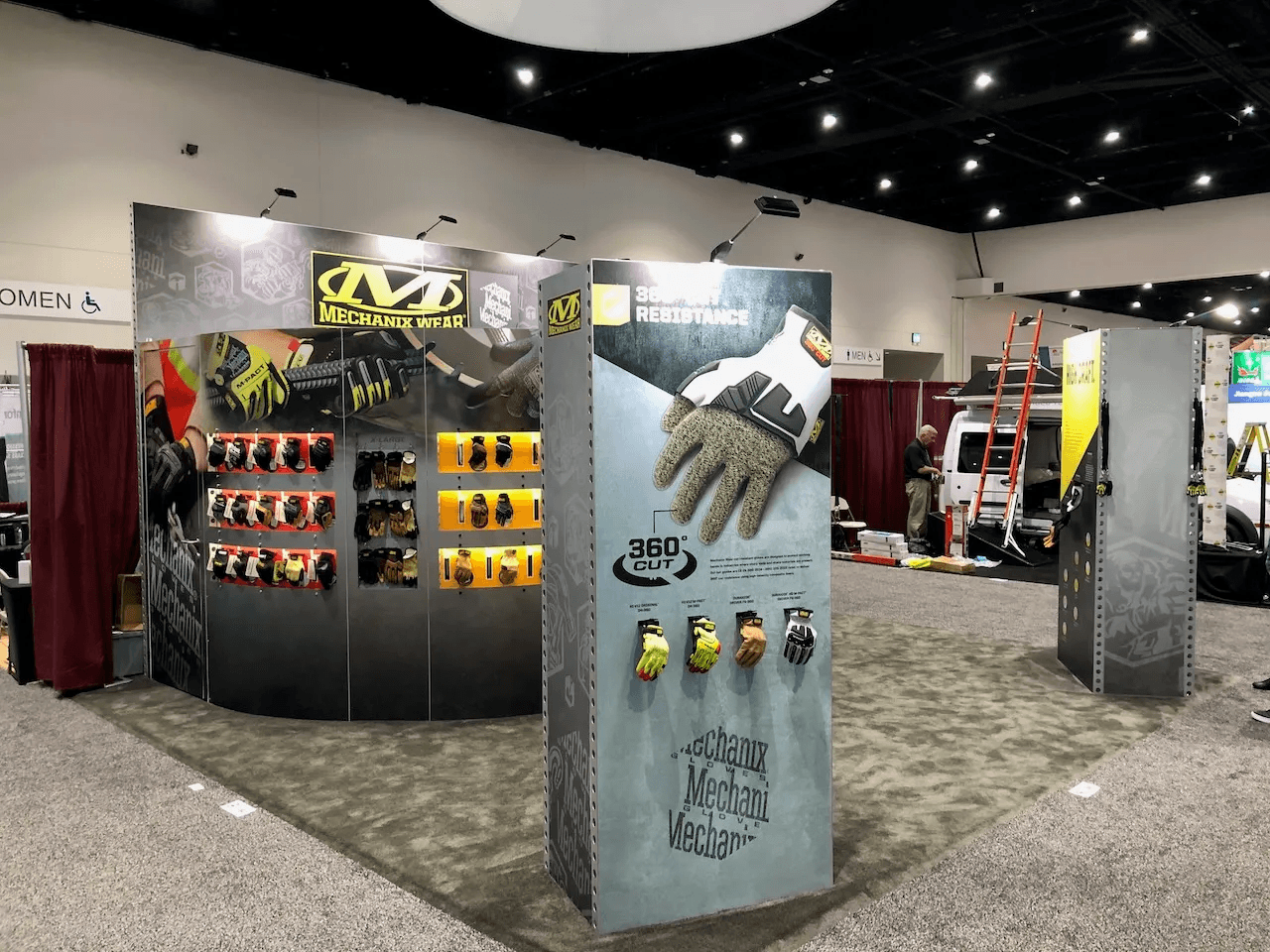
Fabric and SEG (silicone edge graphic) panels provide busy, wrinkle-free visuals that can be swapped out between shows, a critical feature for exhibitors rotating through AmericasMart Atlanta's market weeks. These components facilitate rapid graphic changes during multi-day events, minimizing downtime and allowing focus on buyer interactions. Modular towers and curved walls add dimensionality, drawing attention in inline booth spaces where perimeter visibility is limited, and their lightweight design complies with freight handling limits at venues like Centennial Olympic Park for outdoor-adjacent activations.

Configuration Strategies for Atlanta Venues

For inline booth displays in the Georgia World Congress Center's expansive halls, 10x20 or 10x10 modular setups prioritize perimeter branding with backlit counters and tiered shelving for product demos. These configurations incorporate power-ready modules that integrate smoothly with venue electrical drops, supporting laptops, monitors, and interactive kiosks without extension cord hazards. In contrast, peninsula exhibits at AmericasMart Atlanta leverage deeper floor space for central freestanding towers that create immersive 360-degree experiences, using modular pods for segmented storytelling that guides visitors through brand narratives.

Island booth adaptations shine at the Georgia International Convention Center, where fly-in conferences demand bold overhead canopies and suspended elements hung from modular trusses. These setups account for the venue's SkyTrain proximity by emphasizing quick assembly times under 4 hours, with wheeled cases that navigate tight service corridors. Suburban deployments at Cobb Convention Center often blend modular elements with ballroom draping, forming hybrid spaces for corporate keynotes followed by networking receptions, where reconfigurable partitions divide areas dynamically.

Logistics Alignment Across Market Zones

Coordinating modular booths for downtown Atlanta requires precise scheduling around Georgia World Congress Center's peak load-in windows, where multiple halls operate simultaneously for conventions and sports-adjacent events. Planners sequence frame assembly first, followed by graphic tensioning and lighting tests to meet union labor timelines, ensuring exhibits are visitor-ready before general admission. This zone's depth in exhibit demand extends to Centennial Olympic Park activations, where modular systems must interface with temporary outdoor flooring and weather-resistant enclosures.

Airport corridor operations at Georgia International Convention Center and Gateway Center Arena emphasize compact crating for SkyTrain and shuttle transfers, with modular designs that disassemble into cases under 150 pounds per segment for easy handler transport. Fast-turn meeting programs here benefit from pre-kitted connector sets and color-coded labeling, reducing on-site errors during overnight show changes. Northwest suburban work at Cobb Convention Center incorporates modular flexibility for regional trade shows, where booth footprints adjust to ballroom pillars and adjacent staging without structural modifications.

Customization Within Modular Frameworks

While rooted in standardized components, modular booths allow integration of bespoke elements like vacuum-formed counters or LED video walls locked into extrusion slots, enhancing appeal for AmericasMart's showroom-style markets. Planners select finishes such as frosted acrylic or perforated metal panels to match brand aesthetics, ensuring durability across repeated setups in high-touch environments. Lighting modules with adjustable LED strips provide zoned illumination, highlighting artifacts or demos without venue overhead glare interference.

In the Duluth and Gwinnett corridor at Gas South Convention Center, community and association events utilize modular pods for interactive zones, incorporating charging stations and QR code plinths that snap into base frames. This adaptability supports hybrid formats blending physical booths with digital extensions, a growing trend in Atlanta's corporate event landscape. Overall, the framework's Plug and Play nature enables exhibitors to evolve displays iteratively without full redesigns between downtown flagships and suburban satellites.

Performance Optimization for Atlanta Shows

Modular booths elevate engagement at Georgia World Congress Center conventions by incorporating traffic-flow analytics into layout planning, positioning high-impact towers at eye-level sweet spots for passing attendees. Data-driven adjustments, such as angling entrance panels to funnel visitors inward, maximize dwell time and lead capture in crowded aisles. For AmericasMart market weeks, modular shelving systems organize samples hierarchically, from hero products at waist height to supporting lines above, streamlining buyer decision paths amid marathon showroom hours.

At airport venues like Gateway Center Arena, modular designs prioritize audiovisual synergy, with frame-integrated mounts for projectors casting onto tension screens for keynotes. This setup suits sports-adjacent activations where booth elements double as photo ops, using durable laminates resistant to incidental contact. Suburban Cobb events leverage modularity for scalable footprints, expanding from 10x10 demos to 20x20 lounges as attendance builds, maintaining brand consistency across formats.

Sustainability and Reusability in Multi-Venue Use

Atlanta exhibitors gain from modular booths' emphasis on reusability, where core frames endure dozens of deployments across zones like downtown's Georgia World Congress Center to the Cobb Convention Center, cutting waste from single-use builds. Planners track component lifecycles, refreshing graphics seasonally while retaining structural integrity, aligning with venues' green initiatives at facilities like AmericasMart. Fabric selections prioritize recyclable SEG materials, and extrusion recycling programs extend asset value.

Long-term coordination involves inventory audits post-event, repackaging modularity for storage and swift redeployment to GICC fly-in shows or Gas South association meetings. This closed-loop approach minimizes freight volumes, easing logistics burdens in Atlanta's congested corridors and supporting carbon footprint reductions for repeat market participants.

Deployment Best Practices for Regional Events

Planning modular installations for Atlanta's northwest submarket at Cobb Convention Center focuses on ballroom versatility, where booths integrate with Pipe and Drape perimeters using clip-on extensions for polished hybrids. Regional trade shows here demand robust flooring transitions, with modular platforms leveling exhibits over carpeted venues. Corporate programs benefit from lockable storage pods hidden within frames, securing valuables during unattended periods.

Northeast corridor events at Gas South Convention Center employ modular curves to soften angular spaces, creating welcoming nooks for community expos. Planners coordinate with venue teams for freight bay prioritization, staging components in sequence to accelerate builds amid shared loading zones. Across all Atlanta venues, documentation of modular schematics ensures accurate reassembly, safeguarding against configuration drift over multi-year schedules.

Booth Types

Frequently Asked Questions About Modular Trade Show Booths in Atlanta

What makes modular booths suitable for Georgia World Congress Center events?

Their scalable frames and quick-assembly connectors handle the center's large conventions and high-traffic halls, allowing reconfiguration to fit inline or island spaces while meeting strict load-in schedules.

How do modular systems adapt to AmericasMart Atlanta market weeks?

Interchangeable graphics and shelving modules support rapid product rotations during extended showroom hours, optimizing visibility in perimeter-focused displays.

Can modular booths work at airport venues like GICC?

Yes, lightweight cases and compact footprints facilitate SkyTrain-accessible transport and fast setups for fly-in conferences and quick-turn meetings.

What configurations are ideal for suburban Atlanta expos?

Flexible peninsula and hybrid setups adjust to Cobb and Gas South ballroom layouts, blending with draping for corporate and regional events.

How reusable are modular components across multiple shows?

Core extrusions and connectors endure 50+ deployments, with graphic swaps enabling cost-effective reuse between downtown and peripheral zones.

What logistics planning is key for modular booth coordination?

Pre-kitted cases, color-coded parts, and venue-specific sequencing ensure efficient builds, minimizing downtime in Atlanta's multi-zone schedule.

Need a clearer plan?

Ready to Plan Your Modular Booth?

Coordinate your next Atlanta exhibit with expert modular booth planning tailored to GWCC, AmericasMart, and beyond. Get started today.

Start the conversation